
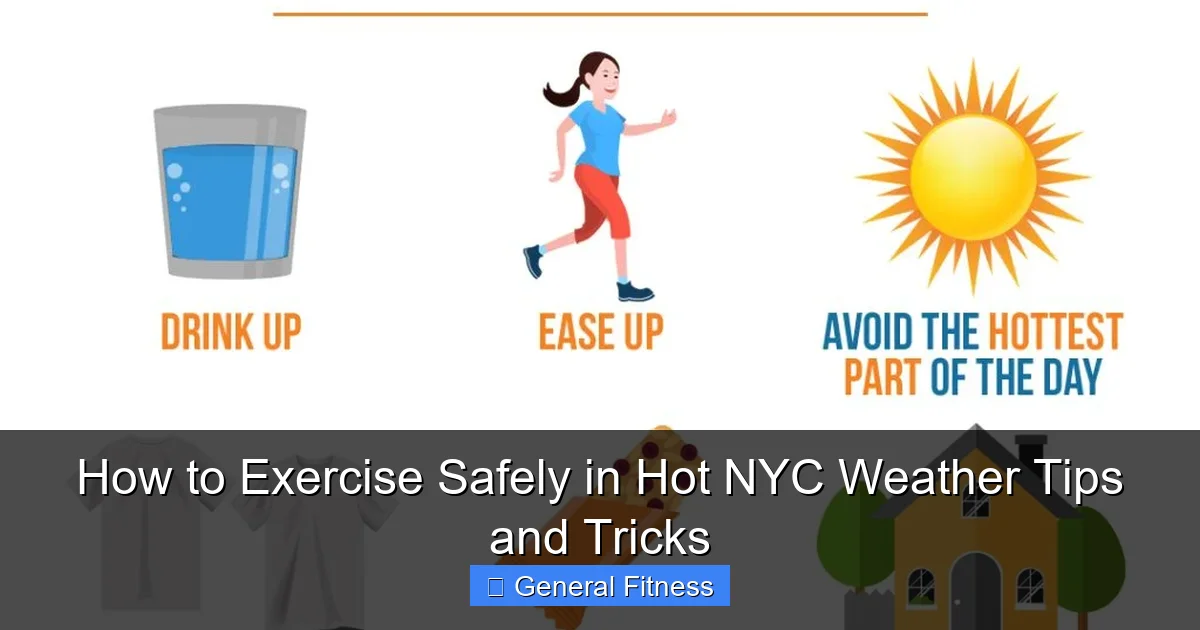
How to Exercise Safely in Hot NYC Weather Tips and Tricks
Exercising in hot NYC weather requires smart planning to stay safe and energized. From hydration to choosing the right time and gear, these tips help you beat the heat while keeping your fitness goals on track.
Key Takeaways
- Hydrate smartly: Drink plenty of water before, during, and after workouts to prevent dehydration in NYC’s heat.
- Time your workouts: Exercise early mornings or late evenings to avoid peak sun and high temperatures.
- Wear breathable clothing: Choose light, moisture-wicking fabrics and hats to stay cool and protect from the sun.
- Adapt your intensity: Lower workout intensity and take more breaks when temperatures rise.
- Know the signs of heat illness: Recognize symptoms like dizziness, cramps, or nausea to act quickly.
- Use shaded or indoor spaces: Seek parks with tree cover or air-conditioned gyms to reduce heat exposure.
- Plan post-workout recovery: Cool down properly and replenish electrolytes after exercising in hot weather.
📑 Table of Contents
- How to Exercise Safely in Hot NYC Weather Tips and Tricks
- 1. Hydration: Your First Line of Defense
- 2. Timing Your Workouts for Cooler Hours
- 3. Dressing for Success: Clothing and Gear
- 4. Modifying Workout Intensity and Duration
- 5. Recognizing and Preventing Heat-Related Illness
- 6. Using NYC’s Outdoor and Indoor Spaces Wisely
- Bonus Tip: Fuel Your Body Right
- Conclusion
How to Exercise Safely in Hot NYC Weather Tips and Tricks
If you’re living in New York City, you know how intense the summer heat can get. The combination of soaring temperatures and the urban heat island effect makes outdoor workouts especially challenging. But staying active during summer is important for both your physical and mental health. So how do you keep exercising safely without risking heat exhaustion or burnout?
In this article, we’ll share practical tips and tricks on how to exercise safely in hot NYC weather. From hydration strategies to smart scheduling, clothing choices, and recognizing warning signs, you’ll get everything you need to enjoy your workouts while staying cool and safe.
Whether you’re a runner hitting Central Park, a cyclist navigating city streets, or a fitness enthusiast using outdoor gyms, these guidelines will help you keep your fitness routine on track through the hottest months.
1. Hydration: Your First Line of Defense
Why Hydration Matters
When the temperature climbs, your body sweats more to cool down. This leads to fluid loss and a risk of dehydration, which can cause fatigue, dizziness, and reduced performance. Staying hydrated is crucial to keep your energy up and prevent heat-related illnesses.
How Much Water Should You Drink?
Before you start exercising, drink at least 16-20 ounces of water. During workouts, sip about 7-10 ounces every 10-20 minutes. After your session, replenish fluids with another 16-24 ounces. If you’re sweating heavily or exercising for more than an hour, consider drinks with electrolytes to replace lost salts.
Practical Hydration Tips
- Carry a reusable water bottle or hydration pack with you.
- Set reminders on your phone to take water breaks.
- Eat water-rich foods like watermelon or cucumbers before and after exercise.
- Avoid excessive caffeine or alcohol, which can dehydrate you.
2. Timing Your Workouts for Cooler Hours
Beat the Heat by Planning Smart
NYC summers often see temperatures peaking between 11 a.m. and 4 p.m. This is when the sun is strongest, and heat stress is highest. To stay safe, aim to exercise early in the morning or later in the evening when it’s cooler and the sun is less intense.
Early Morning Workouts
Starting your workout right after sunrise means cooler air, less pollution, and quieter streets. Many runners and cyclists swear by this time for a refreshing start to the day.
Evening Sessions
If mornings aren’t your thing, try exercising after sunset. Temperatures drop, and the city lights come alive, offering a different but enjoyable atmosphere for your workout.
Using Technology to Check Conditions
Use weather apps to monitor temperature, humidity, and UV index. Some apps even provide “feels like” temperatures, which factor in humidity — an important consideration in NYC summers.
3. Dressing for Success: Clothing and Gear
Choose Lightweight, Breathable Clothing
Opt for clothes made from moisture-wicking fabrics like polyester or nylon blends. These materials pull sweat away from your skin and dry quickly, helping you stay cooler. Avoid cotton, which holds moisture and can make you feel hotter.
Sun Protection is a Must
Wear a wide-brimmed hat or a cap with a neck flap to shield your face and neck from UV rays. Lightweight sunglasses with UV protection help safeguard your eyes. Don’t forget sunscreen — apply a broad-spectrum SPF 30 or higher, and reapply every two hours.
Footwear and Accessories
Choose breathable shoes with good ventilation. Consider moisture-wicking socks to prevent blisters. For runners and cyclists, reflective gear increases visibility during early morning or evening workouts.
Example Gear Setup for a Hot NYC Run
- Light-colored, sleeveless moisture-wicking shirt
- Shorts with breathable mesh panels
- Lightweight running shoes with ventilation
- Cap with UV protection
- Sunscreen and sweat-resistant sunglasses
4. Modifying Workout Intensity and Duration
Listen to Your Body
When exercising in hot weather, your body works harder to cool itself. This means you might need to slow down or shorten your workouts. Pay attention to how you feel — if you’re dizzy, nauseous, or unusually tired, it’s time to rest.
Adjusting Your Routine
- Reduce pace or resistance, especially on hot days.
- Incorporate more frequent breaks in shaded or air-conditioned areas.
- Switch to lower-impact activities like swimming or walking.
- Try indoor workouts during heatwaves to stay safe.
Example: Adapting a Running Routine
If you usually run 5 miles at a steady pace, try cutting distance to 3 miles and adding walk breaks every mile. Alternatively, run at a slower speed and focus on form and breathing.
5. Recognizing and Preventing Heat-Related Illness
Common Heat Illnesses
Heat cramps, heat exhaustion, and heat stroke are serious conditions caused by overheating. Knowing the symptoms helps you act quickly.
Symptoms to Watch For
- Heat cramps: muscle spasms or pain, usually in legs or abdomen
- Heat exhaustion: heavy sweating, weakness, headache, nausea
- Heat stroke: confusion, rapid heartbeat, fainting, dry skin
What to Do if Symptoms Occur
Stop exercising immediately. Move to a cool, shaded area and drink water or an electrolyte beverage. Use a damp cloth to cool the skin. If symptoms worsen or heat stroke is suspected, call 911 right away.
6. Using NYC’s Outdoor and Indoor Spaces Wisely
Seek Shaded Routes and Parks
When exercising outdoors, choose paths with tree cover or near water bodies that can help cool the air. Central Park, Riverside Park, and Prospect Park have many shaded trails perfect for hot weather workouts.
Take Advantage of Air-Conditioned Gyms
On the hottest days, consider moving your routine indoors. Local gyms and community centers provide a climate-controlled environment for cardio, weights, and classes. This can also be a good opportunity to try new workouts.
Cooling Down After Exercise
After a hot workout, spend time cooling down with gentle stretching in a shaded or air-conditioned spot. Drink fluids and consider a cool shower to lower your body temperature.
Bonus Tip: Fuel Your Body Right
Nutrition for Hot Weather Workouts
Eating light, balanced meals helps maintain energy levels. Focus on fresh fruits, vegetables, and lean proteins. Avoid heavy, greasy foods before exercise, which can cause discomfort in the heat.
Post-Workout Recovery
Replenish lost electrolytes with foods like bananas, oranges, or sports drinks. Proper nutrition supports muscle recovery and hydration.
Related Tip
If you’re interested in optimizing your daily routine, check out our guide on how to choose a commuter backpack for better posture. Good posture supports overall fitness and reduces strain during all activities.
Conclusion
Exercising safely in hot NYC weather is all about preparation, smart choices, and listening to your body. Hydrate well, pick the right times for your workouts, dress appropriately, and adjust your intensity to avoid heat stress. Knowing the signs of heat illness and using shaded or indoor spaces can keep you safe and motivated throughout the summer.
With these tips and tricks, you can enjoy your fitness routine without sacrificing safety. Remember, staying active is great, but your health always comes first. Stay cool, stay safe, and keep moving!
Frequently Asked Questions
What is the best time to exercise in hot NYC weather?
The best times are early mornings or late evenings when temperatures are cooler and the sun is less intense. Avoid exercising between 11 a.m. and 4 p.m. when heat and UV rays peak.
How much water should I drink before and during a hot-weather workout?
Drink about 16-20 ounces of water before your workout and sip 7-10 ounces every 10-20 minutes during exercise. After finishing, replenish with another 16-24 ounces to stay hydrated.
What kind of clothing is recommended for exercising in NYC’s heat?
Wear light-colored, breathable, and moisture-wicking fabrics like polyester blends. A hat with UV protection and sunscreen are essential to protect your skin from the sun.
How can I recognize heat exhaustion during exercise?
Symptoms include heavy sweating, weakness, headache, dizziness, nausea, and muscle cramps. If you experience these, stop exercising immediately and move to a cooler place.
Are indoor workouts a good alternative during heatwaves?
Yes, indoor workouts in air-conditioned gyms or at home provide a safe environment to stay active while avoiding the risks of heat-related illness.
Can I continue my usual workout intensity during hot weather?
It’s best to reduce workout intensity and duration when it’s hot. Listen to your body and take frequent breaks to avoid overheating and injury.